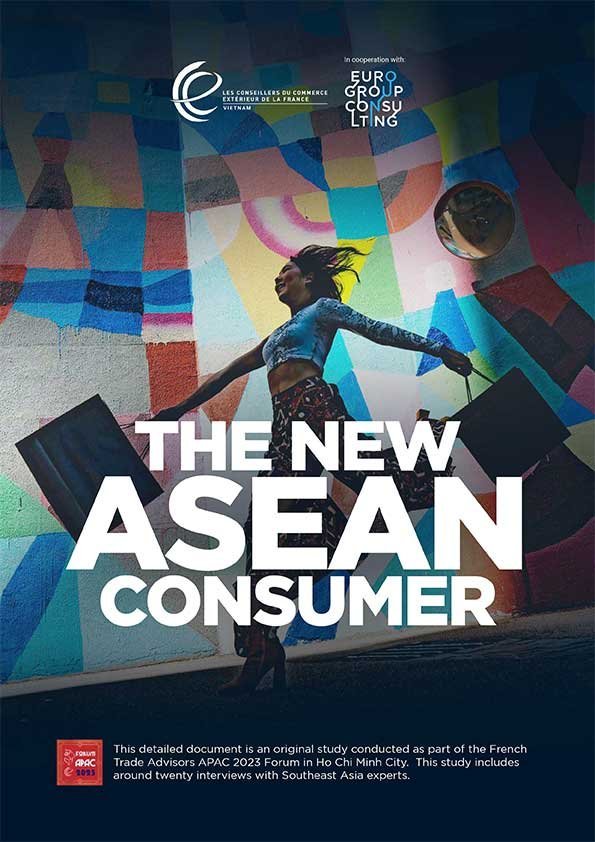
The New ASEAN Consumer: Understanding Southeast Asia’s Market Shift
Southeast Asia is entering a new phase of consumer transformation. Over the past decade, ASEAN economies have experienced sustained growth driven by expanding domestic demand, rapid urbanization, digital acceleration, and the rise of a confident middle class. This evolution is fundamentally reshaping how companies approach market entry, product positioning, and long-term growth in the region.
The New ASEAN Consumer white paper by Eurogroup Consulting, developed in collaboration with the French Trade Advisors for the CCE APAC Forum, explores the structural shifts redefining consumption patterns across ASEAN member states.
The report highlights how economic prosperity has translated into increasingly sophisticated consumer expectations. While income disparities remain between more developed markets such as Singapore and emerging economies like Vietnam, Indonesia, and the Philippines, purchasing power across the region continues to strengthen. A digitally connected, mobile-first population is driving new retail models and accelerating omnichannel adoption.
Post-pandemic behavioral shifts are particularly significant. Sustainability awareness has grown substantially, with consumers placing greater emphasis on environmental impact, ethical sourcing, and corporate responsibility. Businesses operating in ASEAN must now demonstrate authentic commitments to sustainability rather than relying solely on price competitiveness.
At the same time, the expanding middle class is reshaping demand across categories including FMCG, healthcare, automotive, education, and financial services. Younger consumers are more brand-aware, digitally engaged, and willing to pay premiums for value, convenience, and lifestyle alignment.
Localization remains a critical competitive lever. ASEAN markets are diverse in culture, regulation, and purchasing behavior. Companies that adapt product offerings, pricing strategies, and distribution channels to local realities outperform standardized regional approaches.
The white paper also explores how retailers are responding to rapid digital transformation. E-commerce growth, social commerce adoption, and mobile payment penetration are creating new opportunities — but also intensifying competition.
For executives, understanding the new ASEAN consumer is no longer optional. Strategic alignment with demographic trends, sustainability expectations, and digital ecosystems will determine market relevance.
Download the full white paper to gain data-driven insights and strategic recommendations for winning in Southeast Asia’s evolving consumer landscape.